

LN Control System
The Distributed Control System (DCS) is the result of LN’s 26 years of technical research, local experience and knowledge in the field of industrial automation and process control. This product is designed with the aim of providing a reliable replacement for expensive and sanctionable foreign systems and in accordance with global standards with much better and more efficiency than other competitors and has been successfully used in power plant, steel, petrochemical
and chemical projects.

The Distributed Control System (DCS)
LN 3000
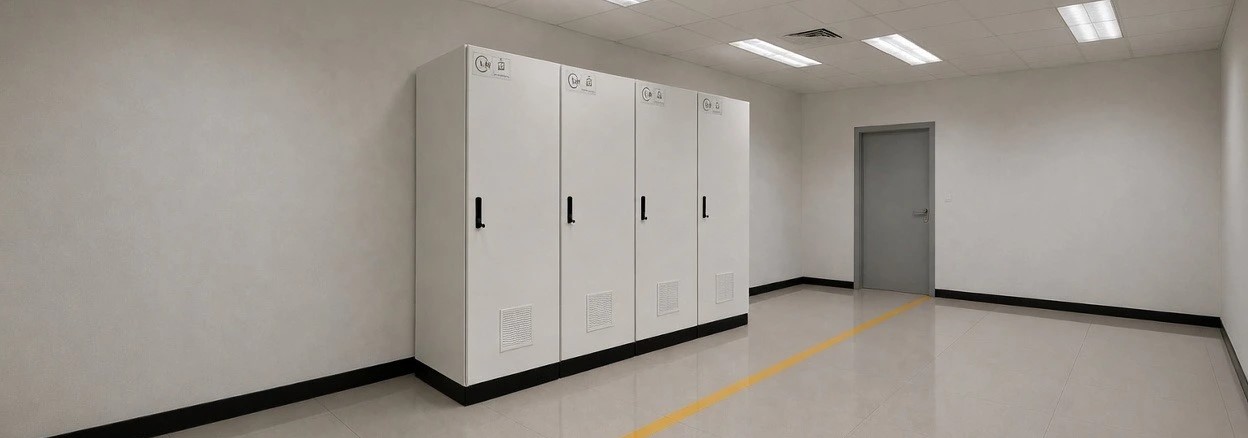
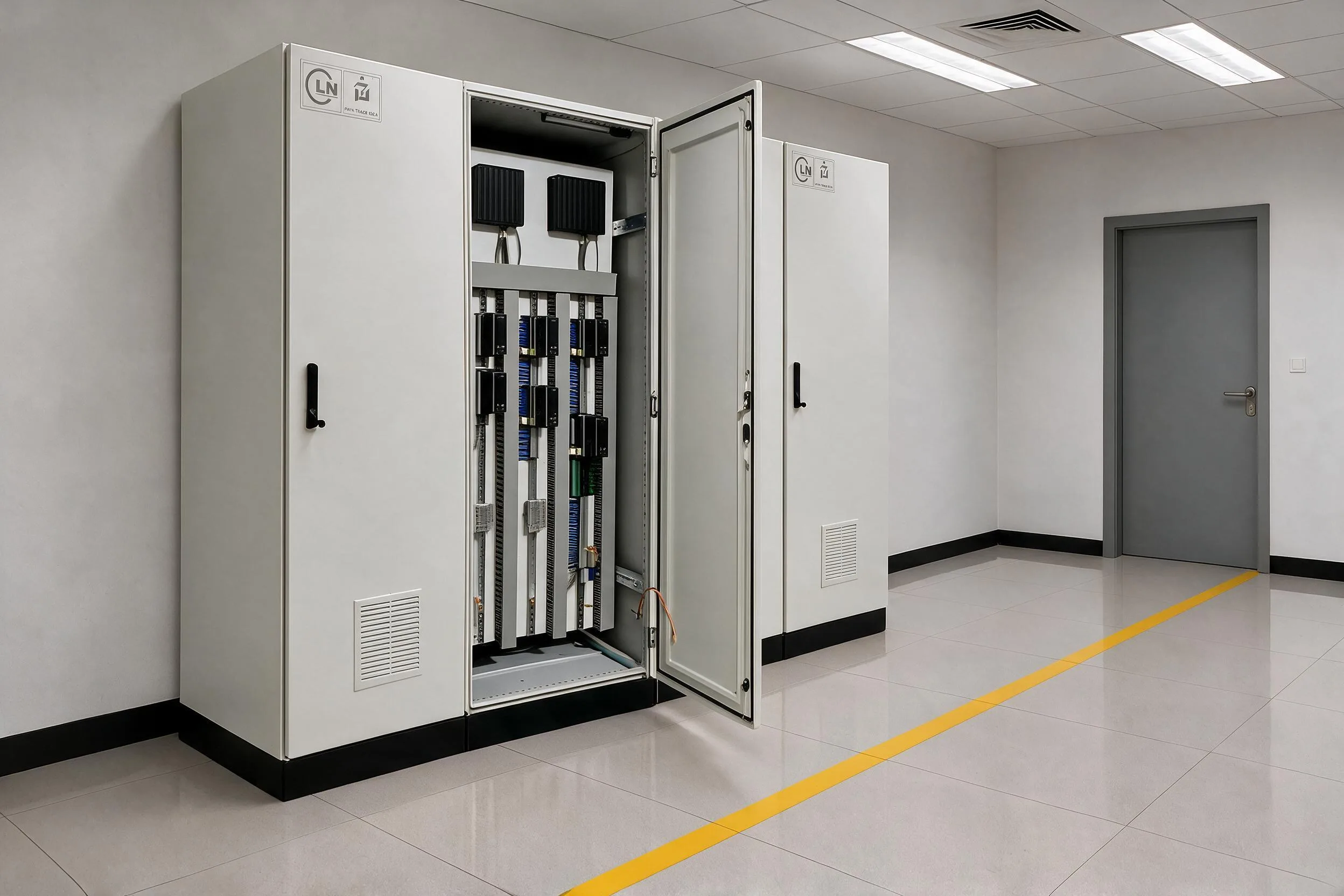
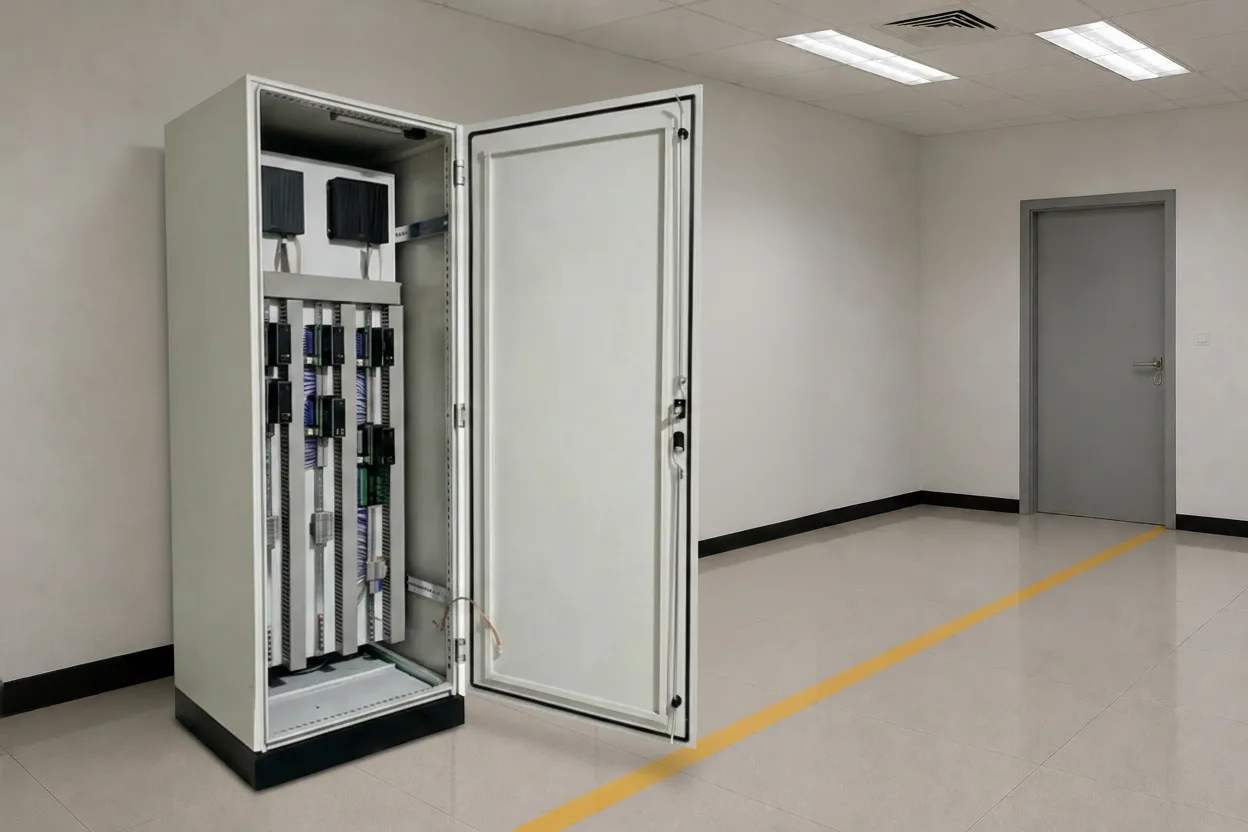

The LN3000 Distributed Control System represents a significant evolution in process automation, serving as a next-generation platform that masterfully unifies the strengths of traditional DCS architecture with the flexibility of PLC logic. This integration creates a fully unified automation environment that not only simplifies system architecture but dramatically expands the application possibilities, making it a truly open and future-ready solution for industrial control.
At the heart of the LN3000 is a commitment to continuous, reliable operation. Its design philosophy is rooted in resilience, featuring comprehensive redundancy across critical components including the power supply, communication networks, and control stations. This ensures that the system remains immune to single points of failure, with a power architecture so robust that the loss of any single supply cannot compromise the entire system’s operation. The controller itself is engineered for stability, operating as a safe, reset-free unit with a low-power processor that requires no fan, thereby enhancing its service life and ensuring unwavering stability under demanding conditions.
The system’s communication backbone is both high-speed and stable, leveraging a real-time redundant architecture that combines a primary data network with a robust CAN fieldbus. This design guarantees swift, unimpacted data transmission with exceptional noise immunity, while the process-level monitoring between redundant control stations adds an extra layer of operational security. When a field device need attention, the system supports error-free restoration, ensuring that adjustments or replacements cause no disturbance to the running process. This ease of maintenance extends to the physical hardware, where each plug-in device can be replaced under normal operating conditions without affecting overall system performance, and every input/output point is easily identifiable, connectable, or disconnectable.
From a user perspective, the LN3000 is distinguished by its intelligent and intuitive software environment. The configuration tools are mature and straightforward, empowering operators to not only define control logic but also to fully construct system databases, visual pages, and reports directly from the operator station. This simplicity carries through to maintenance, where control logic can be modified and debugged online with minimal effort, and a powerful self-diagnostic function provides clarity at every level of the system.
Finally, the LN3000 excels in connectivity, acting as an open gateway to higher-level plant operations. It provides diverse and rich interfaces for seamless integration with plant supervisory information systems (SIS) and management information systems (MIS), supporting standard protocols like MODBUS, as well as custom non-standard protocols. This openness, combined with its powerful control capabilities, makes the LN3000 an exceptionally versatile solution. It is equally adept at managing complex power plant control for large and small units, overseeing intricate water treatment networks, automating coal handling, and orchestrating desulfurization and ash removal processes, proving its value across the entire spectrum of industrial auxiliary systems.