



LN01D isolated Analog Input module
The isolated analog input module consists of two models: LN01D and LN01D-RD.
LN01D has 8 channels for two end input, electrical isolation between each channel, using 12-bit resolution A/D. When LN-01D is working, the input voltage or current signal is converted by the input end, isolation switch, low pass filter, instrument amplifier, A/D, through the optoelectronic isolation access to the MCU. The MCU collects data, performs software filtering, and communicates data with the data processing unit (LNOOH) through the CAN communication interface.
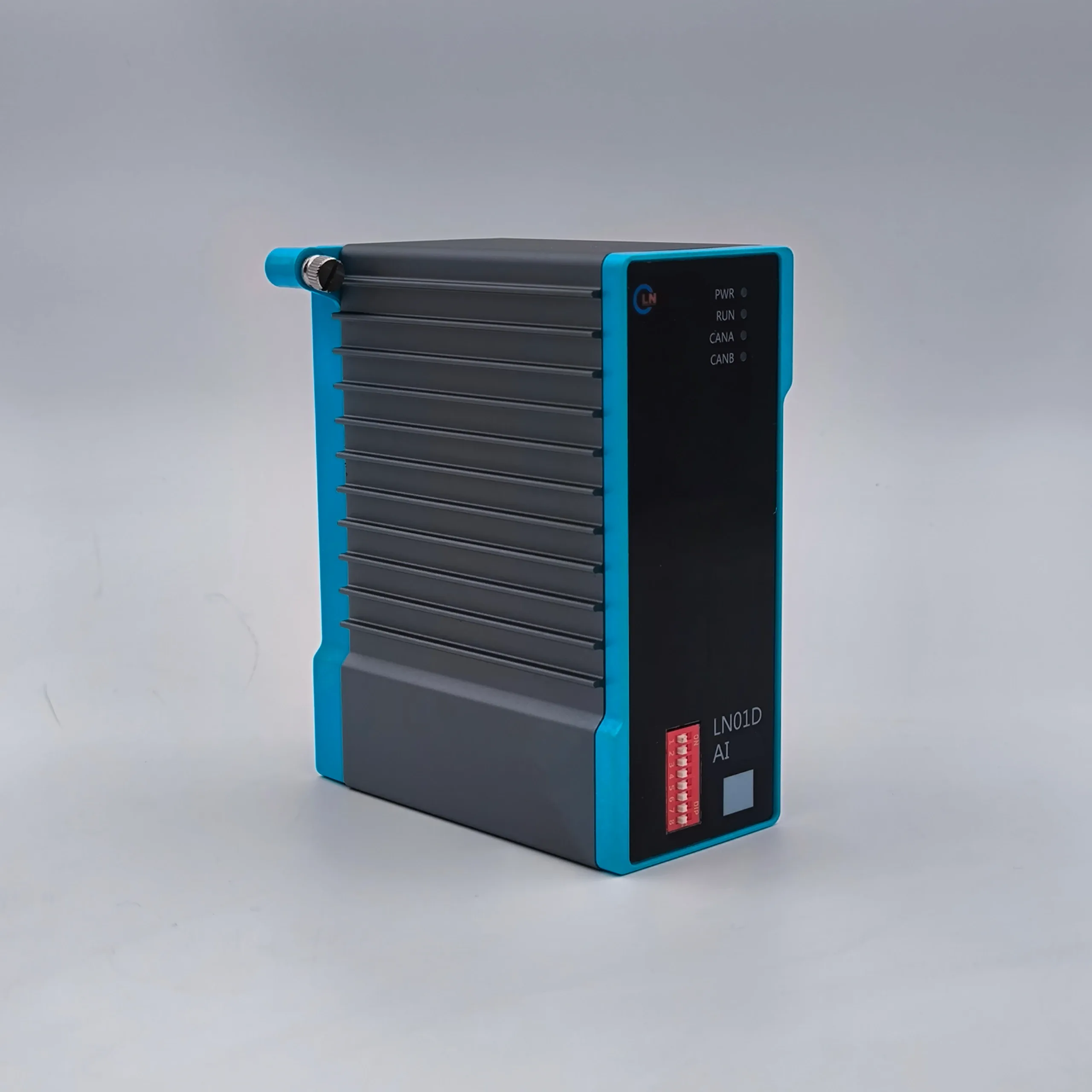

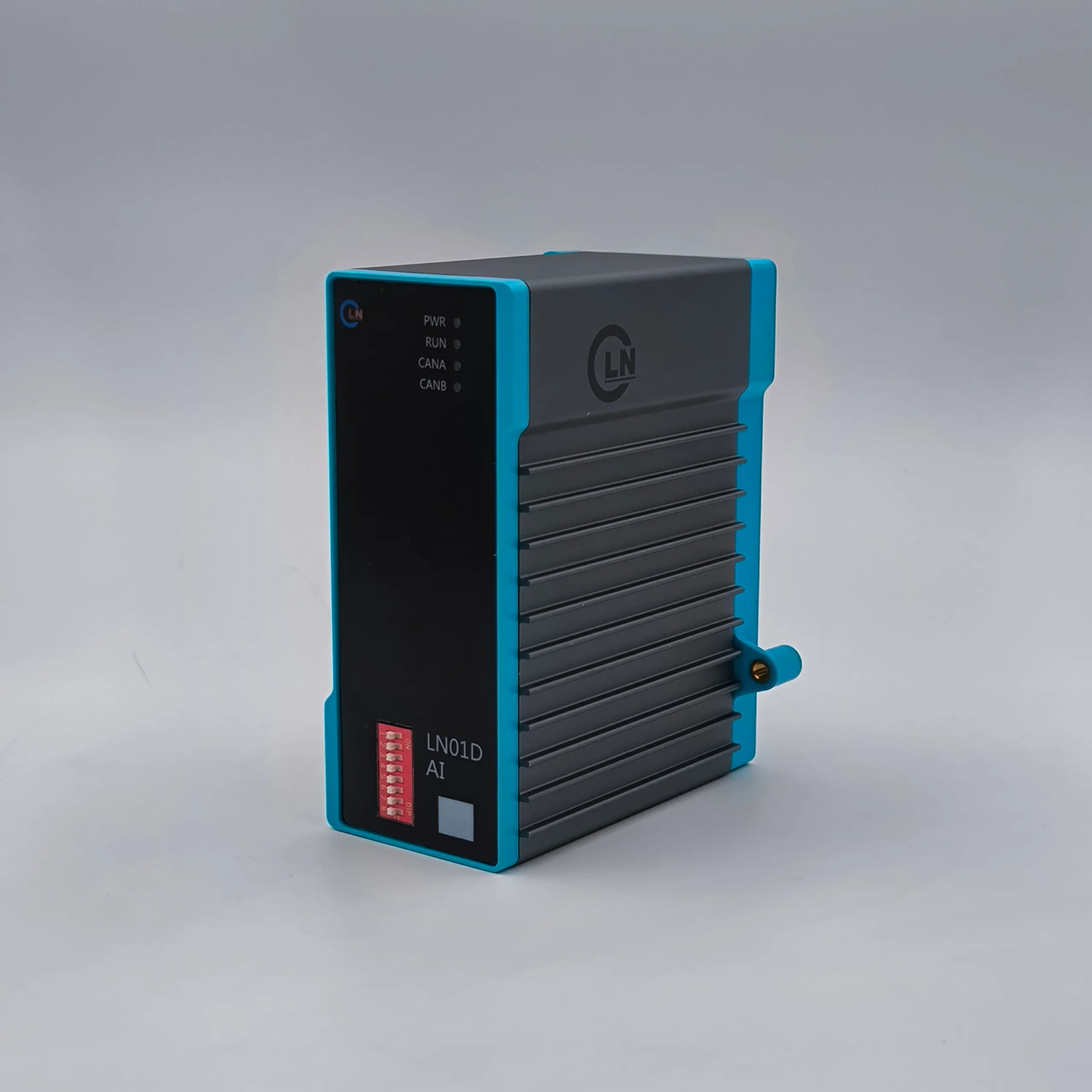
The LN-01D measurement loop has two power supply modes: internal power supply and external power supply. External power supply means that the transmitter can provide an active analog input signal, and internal power supply means that LN-01D module provides 24V power supply to the transmitter.
The LN01D and LN01D‑RD are high‑precision analog input modules designed for reliable data acquisition in industrial environments. Each module provides eight fully isolated input channels, which means that every channel is electrically separated from the others, effectively preventing cross‑talk and ground‑loop interference between connected sensors or transmitters. These channels accept standard process signals, specifically current loops in the range of 4 to 20 mA or 0 to 10 mA , giving users flexibility to match common field devices.
Measurement accuracy reaches an impressive 0.1 percent, ensuring that even small signal variations are captured faithfully. To accommodate different signal types, the input circuitry offers a current input impedance of 250 ohms and a voltage input impedance greater than 2 megaohms, which minimizes loading effects on the source. Each channel also benefits from low‑pass filtering to reduce high‑frequency noise, along with over‑flow and over‑pressure protection that safeguards the module against accidental overdrives. The common‑mode rejection ratio exceeds 130 dB, and the differential‑mode rejection is better than 60 dB, so the module performs exceptionally well in electrically noisy settings such as factories or substations. Furthermore, the isolation voltage between any two channels is rated at 1000 volts RMS, providing an extra layer of safety for both the module and the connected equipment.
Power supply configuration is highly adaptable, because the user can select between internal and external power sources via a simple dial switch. This design also supports two‑wire transmitters, which are commonly used in loop‑powered applications, eliminating the need for separate wiring in many cases. The module updates all channels simultaneously at a fixed slew rate of 10 times/s, delivering timely data for monitoring and control loops without overwhelming the host system.
For communication, the LN01D/LN01D‑RD features two independent interface ports that operate in mutual redundancy. This means that if one communication path fails, the second one automatically takes over, ensuring uninterrupted data exchange with the controller or host computer. The communication speed is user‑selectable among four rates—20, 100, 500, and 1000 kB/S per second—so the module can be adapted to different network requirements and baud rate constraints.
Power delivery is equally robust, as the module supports dual redundant power inputs. If the primary 24‑volt DC supply (with a tolerance of ±10 %) drops out, the secondary supply immediately sustains operation without any interruption. The power isolation voltage is rated at 1000 volts DC, which protects the control side from potential surges originating from the field side. Maximum power consumption depends on the chosen supply mode: when all channels are powered externally, the total draw is 3 watts, whereas using the internal supply for all channels increases the maximum to 7 watts.
In terms of maintenance and installation, the module includes a quick‑disconnect master fuse that allows rapid replacement without tools, and each individual channel is equipped with an over‑current self‑recovery fuse. This fuse automatically resets after a fault condition is removed, reducing downtime and eliminating the need for manual fuse changes. Addressing the module on a multi‑drop network is straightforward, because the address is set entirely by DIP switches, making reconfiguration quick and error‑free. Finally, the module is rated for an operating temperature range of ‑10 to +60°C, which makes it suitable for a wide variety of indoor industrial settings, from chilled processing areas to warm control cabinets. Overall, the LN01D/LN01D‑RD combines precision, isolation, redundancy, and ease of use, making it a dependable choice for critical analog signal monitoring applications.
Feature :

Fully Isolated Channels with High Noise Immunity :
Each of the 8 channels is electrically isolated from the others (1000V RMS between channels), with a common‑mode rejection ratio >130 dB, effectively eliminating cross‑talk and ground‑loop interference in harsh industrial environments.
Dual Redundant Communication Paths :
Two independent communication ports operate in mutual redundancy, so if one path fails, the other automatically takes over to ensure uninterrupted data exchange with the host controller.
Flexible Power Supply and Transmitter Support :
Users can select internal (24V supplied to transmitters) or external power via a dial switch, supporting both active signals and two‑wire loop‑powered transmitters without extra wiring.
Robust Protection and Easy Maintenance :
Each channel has an over‑current self‑recovery fuse (auto‑resets after faults), plus a quick‑disconnect master fuse for tool‑free replacement, minimizing downtime and eliminating manual fuse changes.